
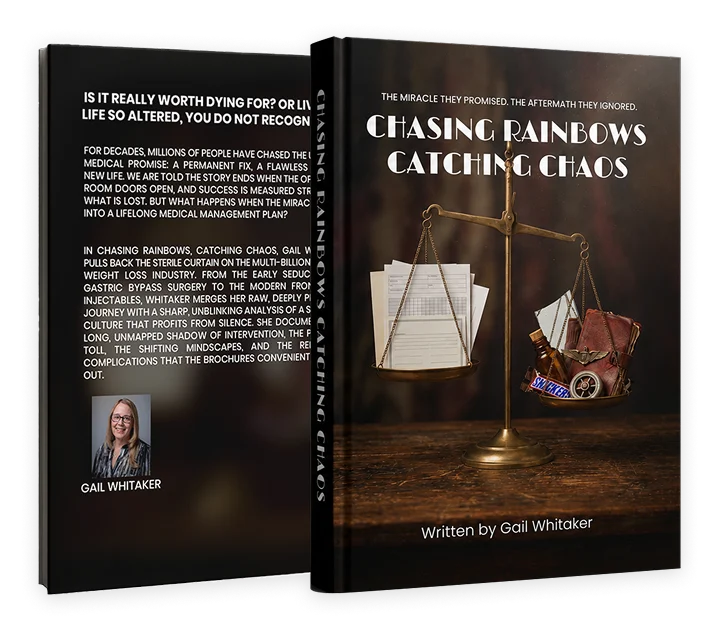
Chasing Rainbows, Catching Chaos

A candid gastric bypass memoir exposing the promises, complications, and true cost of medical weight loss.

What is the core message of Chasing Rainbows, Catching Chaos?

Chasing Rainbows, Catching Chaos is an unvarnished account of surviving bariatric surgery complications over two decades. It provides prospective patients with the medical realities, hidden risks, and critical questions needed to make decisions with genuine informed consent.

PRE ORDER

Lorem Ipsum is simply dummy text of the printing and typesetting industry.

BEST SELLER

Lorem Ipsum is simply dummy text of the printing and typesetting industry.

IS IT REALLY WORTH THE PRICE YOU PAY?

Every year, hundreds of thousands of people are told that altering their digestive tract or injecting weekly pharmaceuticals will solve their weight struggles forever. Glossy brochures show smiling faces and dramatic before-and-after pictures. But what happens when the applause stops and year five, ten, or twenty arrives?

In Chasing Rainbows, Catching Chaos, author Gail Whitaker pulls back the curtain on the commercial diet and surgical industries. Drawing from twenty-four years of personal medical records, five operations, and permanent nerve damage, Gail delivers an honest look at the long term gastric bypass risks that surgeons and marketing seminars rarely discuss.
What You Will Discover Inside

  • The Dog-and-Pony Show: How hospital seminars market rapid weight reduction while minimizing life-threatening bariatric surgery complications.
  • The Surgical Cascade: The physical reality of gastrogastric fistulas, stoma revisions, and living without a stomach following a total gastrectomy.
  • Late-Stage Malabsorption: Why oral vitamins fail post-op, leading to severe thiamine and vitamin B12 deficiency, nerve atrophy, and memory loss.
  • Scalpels to Syringes: An honest critique of modern weight loss drugs like Ozempic and Wegovy, showing how today’s marketing repeats the same patterns as surgery.
  • The Missing Follow-Up: Why the healthcare system tracks thirty-day surgical success but offers little support for chronic complications decades down the line.